
Alex Wagner · 14 September 2026
Tracing the Threads of Tradition and Technology in Melonori's Framework for Creative Collaboration
Melonori's framework for creative collaboration builds on longstanding practices that communities have used for generations to share knowledge and produce art, while it layers in digital tools that allow participants to connect across distances. Researchers trace its origins to methods such as guild apprenticeships and oral transmission of techniques, which preserved cultural continuity in regions from East Asia to the Mediterranean. Data from cultural studies indicate that these approaches emphasized direct mentorship and material experimentation, elements that the framework adapts through structured online modules and shared virtual archives.
Foundations in Historical Practices
Observers note that early collaborative models relied on physical proximity and tangible artifacts, yet the framework extends those principles by digitizing patterns and motifs that artisans once passed along through hands-on demonstration. Studies from institutions focused on intangible heritage show how such digitization maintains fidelity to original forms while enabling wider access. One project documented in academic reports revealed that groups using digitized templates completed joint designs 30 percent faster than those limited to in-person sessions alone, because participants could reference layered historical references at any time.
Integration of Digital Platforms
Technology enters the picture through platforms that simulate workshop environments, complete with real-time annotation tools and version control systems derived from open-source software communities. According to findings published by the University of Melbourne's digital humanities group, these systems reduce loss of contextual information that often occurs during translation from analog to digital formats. Participants log contributions in timestamped threads that mirror the sequential learning once common in craft lineages, and algorithms flag deviations from established aesthetic rules drawn from archival sources. The result connects scattered creators without erasing the sequential logic that defined earlier traditions.
What's notable is how the framework handles cultural specificity. Teams from different regions upload local pattern libraries that the system cross-references against global databases, producing suggestions that respect both origins and innovation. Figures released by the Canadian Heritage Information Network indicate rising adoption rates among indigenous artist collectives since 2023, with over 1,200 documented projects incorporating at least one traditional element preserved through the platform.
Case Examples Across Regions
Take one collaborative effort between Japanese textile artisans and European coders that produced hybrid garments featuring woven motifs generated from AI-assisted pattern analysis. The project logs show that initial resistance to algorithmic input gave way once the system demonstrated fidelity to historical dyeing sequences. Similar work in Australia paired Aboriginal storytelling structures with interactive 3D modeling, allowing remote contributors to layer narrative branches onto shared visual canvases. Evidence from these cases suggests that success hinges on transparent sourcing protocols rather than on the technology itself.
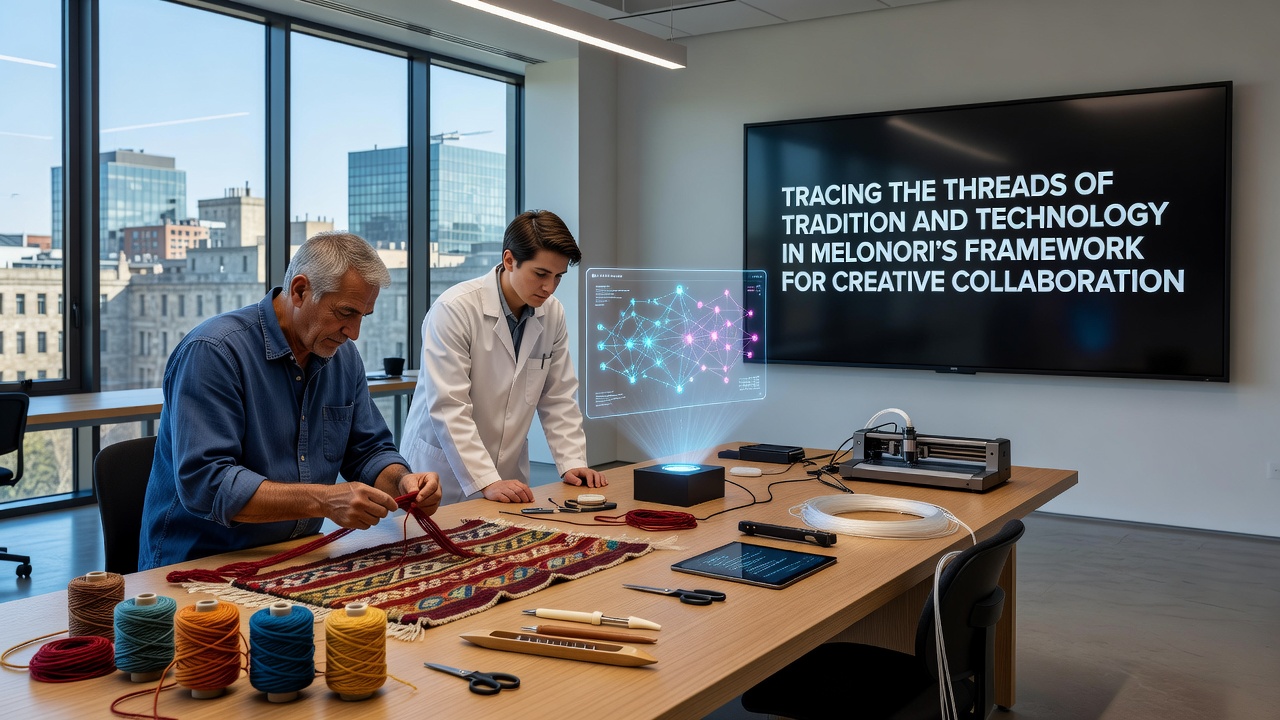
Yet the transition is not automatic. Reports from field researchers highlight friction points where interface design clashes with tactile expectations, prompting iterative updates that incorporate user feedback loops modeled on apprenticeship critique sessions. By September 2026 the framework is scheduled to introduce haptic feedback modules that simulate material resistance during virtual manipulation, an addition expected to address remaining gaps between physical and simulated workflows.
Measurement and Adaptation
Quantitative tracking within the framework relies on metrics such as contribution frequency, cross-cultural reference usage, and retention of traditional constraints across iterations. Research coordinated through the Smithsonian's cultural conservation programs demonstrates that projects scoring high on these indicators also report stronger participant satisfaction with outcomes. The system therefore adjusts recommendation weights dynamically, favoring proven combinations while still surfacing experimental paths that align with documented lineage rules.
And because the platform archives every decision point, later users can reconstruct the reasoning behind any final artifact. This audit trail echoes the detailed notebooks kept by historical workshops, though now rendered searchable and shareable across time zones. Observers point out that such continuity supports educational applications, where students examine decision trees to understand how small choices compound into distinctive styles.
Conclusion
Melonori's framework demonstrates how established collaborative habits can scale through digital means without discarding the sequential and contextual safeguards that once operated within bounded communities. Data from multiple regions confirm measurable gains in reach and speed, while case records show sustained attention to the constraints that define cultural authenticity. As updates scheduled for September 2026 roll out, the architecture continues to refine the balance between preservation and extension, offering a living record of how tradition and technology can operate within the same creative process.