Mia Hoffmann · 12 October 2026
Adaptive Knowledge Weaving in Digital Environments: Examining Version Control Layers and Their Role in Sustaining Innovation Cycles Across Teams
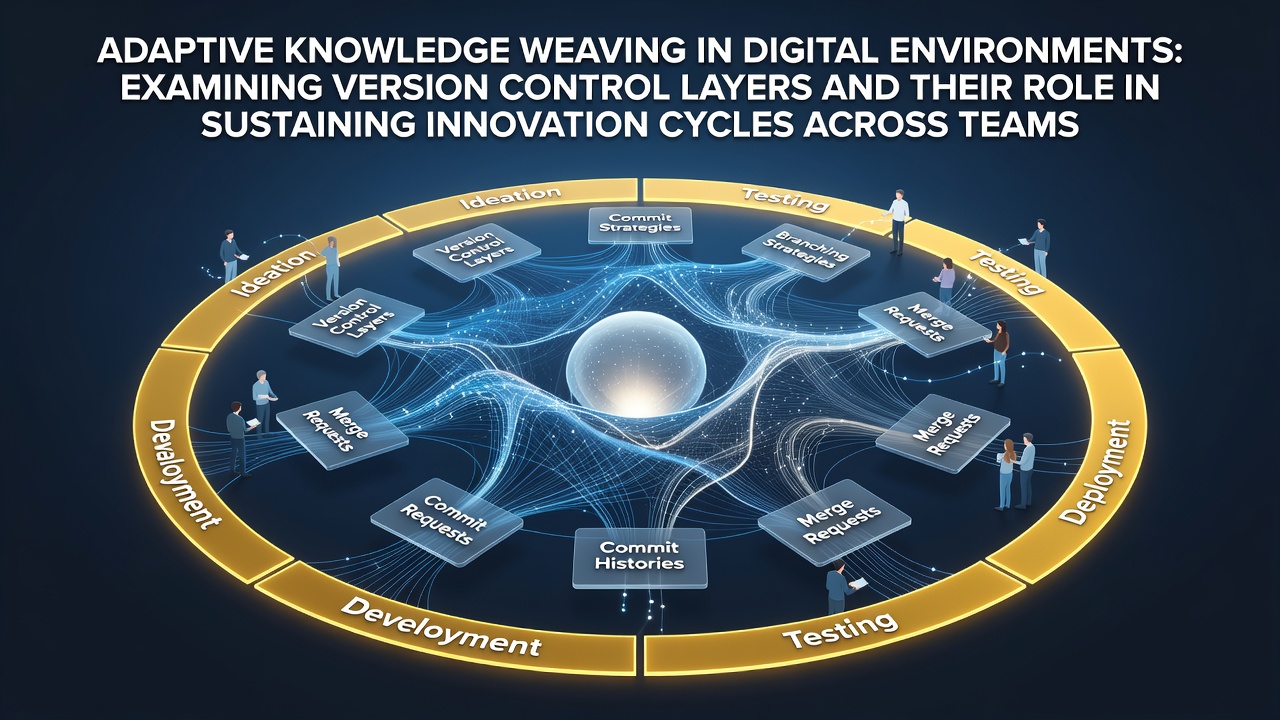
Adaptive knowledge weaving refers to the dynamic process through which teams integrate, revise, and distribute information across digital platforms while maintaining coherence over time. This approach relies on structured data handling systems that allow contributors to build upon existing contributions without losing historical context or introducing conflicts. Version control layers form a core component of these systems because they record every modification, enable branching for parallel development, and support merging that preserves the integrity of shared knowledge repositories.
Core Mechanisms of Version Control in Knowledge Systems
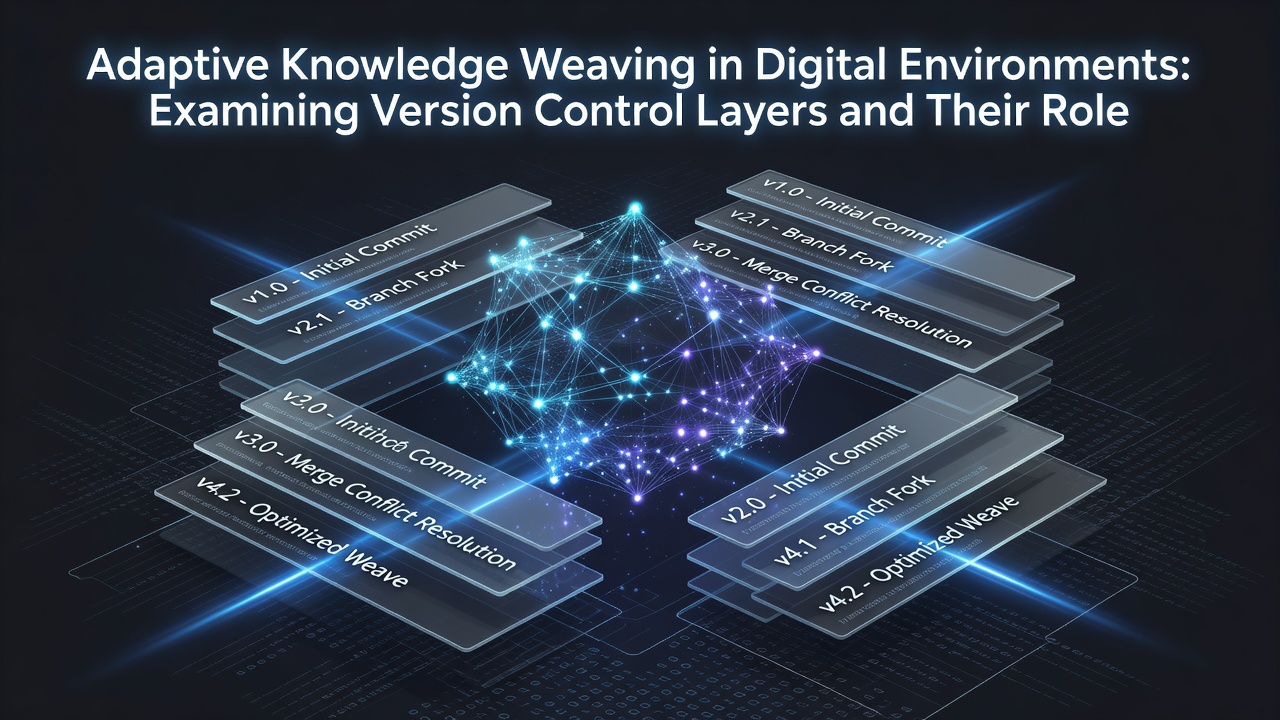
Version control layers operate by creating sequential snapshots of content changes, each tagged with metadata that identifies the author, timestamp, and rationale for the edit. Teams working in distributed environments use these layers to track how ideas evolve through multiple iterations. Data from collaborative platforms indicates that repositories employing granular versioning experience fewer instances of overwritten contributions compared to linear document systems. In practice, this means one contributor can experiment with alternative frameworks while another refines the primary structure, and both paths remain accessible for later integration.
Branching strategies allow subgroups to explore specialized topics without disrupting the main knowledge base. When subgroups complete their work, merge protocols reconcile differences through conflict detection algorithms that highlight overlapping sections. Research conducted by academic institutions in North America has shown that such protocols reduce resolution time for integration disputes by approximately thirty percent in cross-functional groups.
Supporting Sustained Innovation Across Distributed Teams
Innovation cycles depend on the ability to revisit prior decisions, test hypotheses against accumulated evidence, and propagate successful adaptations throughout an organization. Version control layers sustain these cycles by providing an auditable trail that teams consult when evaluating new proposals. A study released in October 2026 by the Commonwealth Scientific and Industrial Research Organisation in Australia documented how organizations using layered versioning maintained higher rates of iterative improvement over twelve-month periods than those relying on static file-sharing methods.
Metadata embedded in each layer captures contextual details such as decision rationales and external references. This information becomes especially valuable during onboarding, as new members can trace the lineage of concepts without requiring extensive verbal briefings. European research consortia have reported similar patterns in multinational projects where participants span multiple time zones and regulatory frameworks.
Practical Implementation Patterns Observed in Industry
Organizations adopt hybrid models that combine automated synchronization with manual review checkpoints. Automated layers handle routine updates such as formatting corrections or citation additions, while human oversight governs substantive shifts in conceptual direction. This division of labor allows teams to allocate attention toward high-value synthesis rather than repetitive reconciliation tasks. Industry reports from Canadian technology councils note that projects employing these hybrid models achieve milestone completion rates that exceed baseline expectations by measurable margins.
Access controls within version control systems further shape knowledge flow by defining who can propose, approve, or archive changes. Role-based permissions ensure that domain experts retain authority over specialized content while still permitting contributions from adjacent fields. Observers have documented cases where such permission structures encouraged cross-pollination between engineering and design teams without compromising technical accuracy.
Emerging Metrics and Evaluation Frameworks
Teams increasingly track quantitative indicators that reflect the health of their knowledge-weaving processes. Commit frequency, merge success rates, and branch lifespan provide proxies for collaborative velocity. Qualitative assessments supplement these figures by examining how readily new insights propagate from individual contributions into collective outputs. Figures compiled by research groups in the Asia-Pacific region reveal correlations between high merge success rates and accelerated product development timelines in software-adjacent fields.
Training programs focused on version control literacy have become standard in many enterprises. These programs emphasize not only command syntax but also the conceptual mapping between version history and organizational memory. Participants learn to interpret diff outputs as narratives of idea evolution rather than mere technical logs.
Conclusion
Version control layers supply the structural backbone that enables adaptive knowledge weaving to persist across extended innovation cycles. By recording, branching, and reconciling contributions systematically, these layers allow teams to balance exploration with coherence. Evidence gathered across multiple regions and sectors continues to illustrate the operational advantages of treating version history as a living record rather than an archival afterthought. As digital environments grow more interconnected, the capacity to weave knowledge adaptively through layered versioning remains a measurable determinant of sustained collaborative output.